
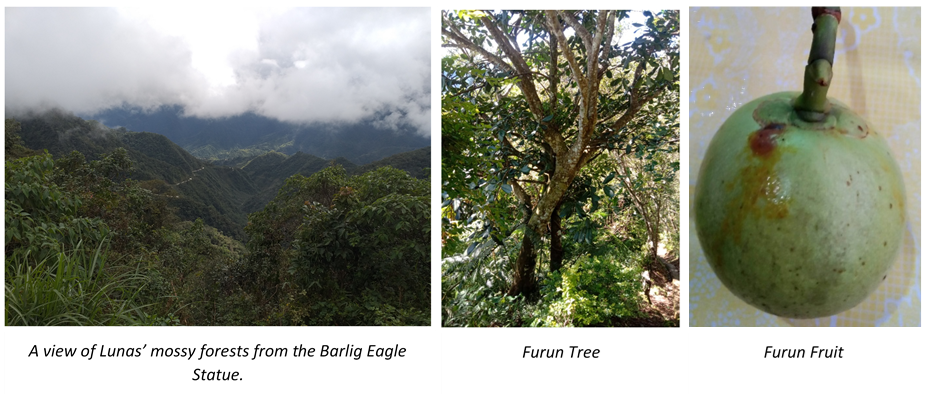
The barangay of Lunas in the municipality of Barlig, Mountain Province lies on the northwestern side of the majestic Mt. Amuyao in the Philippine Cordillera region. This place, dotted with rice terraces watered by clean springs, streams, and rivers, and dominated by pristine mossy forest that is conserved through generations, is home to the Ikachakran indigenous people.
Among the plants that are growing abundantly in the Ikachakran forest is the tree known locally as furun (Garcinia sp.). This tree bears round and sour fruits. The fruit is edible, but it is not usually eaten by the local people due to its sour taste and very sticky yellowish sap. Hence, the fruits, once ripe, basically fall to the ground to the delight of animals such as wild pigs.
While scientific studies on furun have yet to be conducted, it belongs to the same family as tropical fruits like batuan and mangosteen, which are widely valued for their nutritional benefits. Like its relatives, furun is expected to be rich in dietary fiber, organic acids, and natural plant compounds that help support digestion, everyday immunity, and overall wellness.
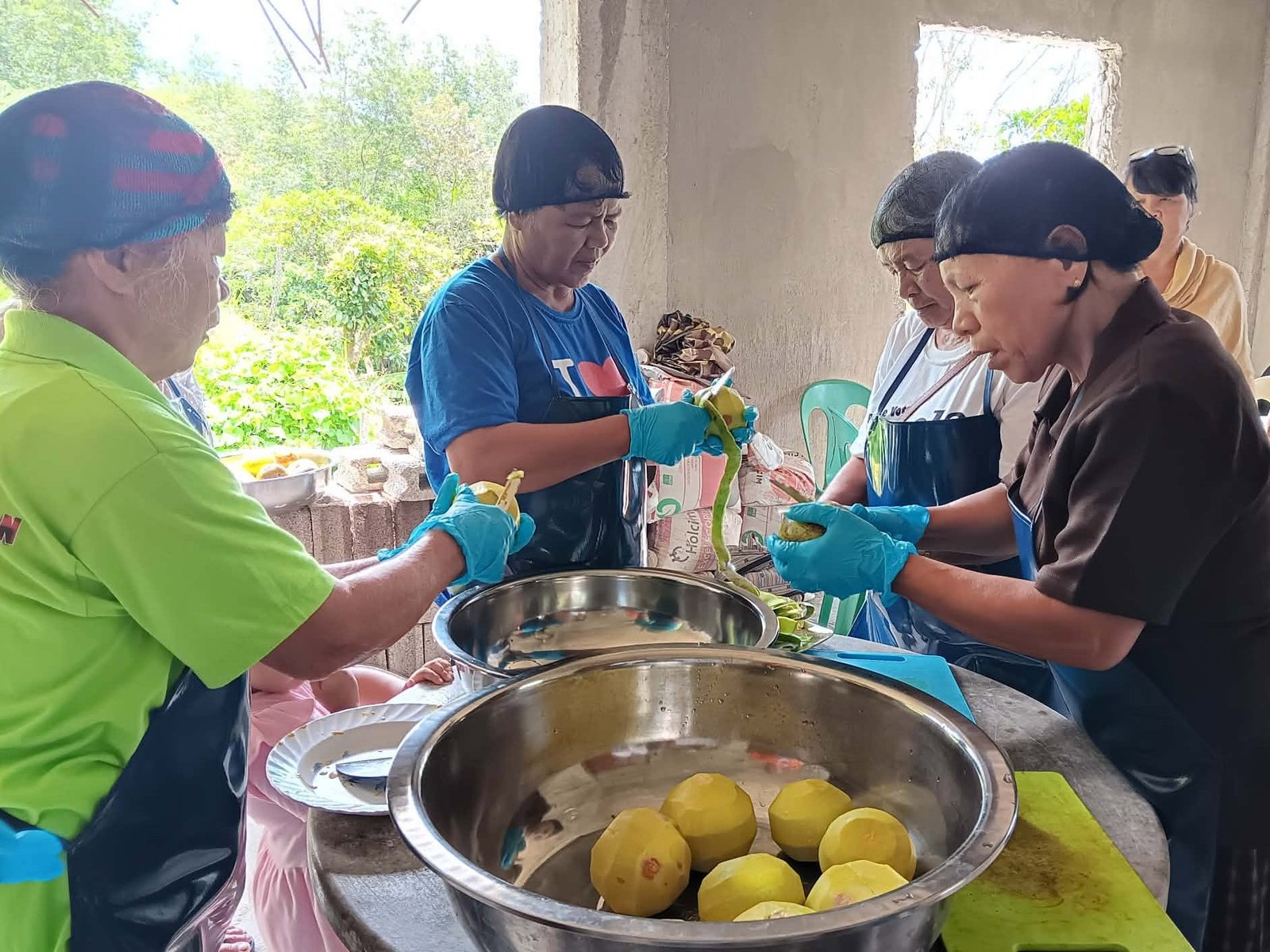
PAFID, through its Luzon Office, has supported a group of Ikachakran women in Lunas who desired to process furun fruit into products that they can sell for their additional livelihood. This assistance was made possible through the organization’s National Land Tenure Program for Indigenous Peoples in the Philippines, which is funded through a grant from the Misereor.
Project support to the women’s group started with product idea development wherein it was determined that the most feasible products would be jam, candy, and a souring agent for dishes widely known in the Philippines as sinigang mix. A hands-on training on furun processing was then conducted in the community on July 8-9, 2026. The training was participated by 12 Ikachakran women who are the core members of the group. Other processing materials were also later provided to facilitate the initial production of the women’s group.
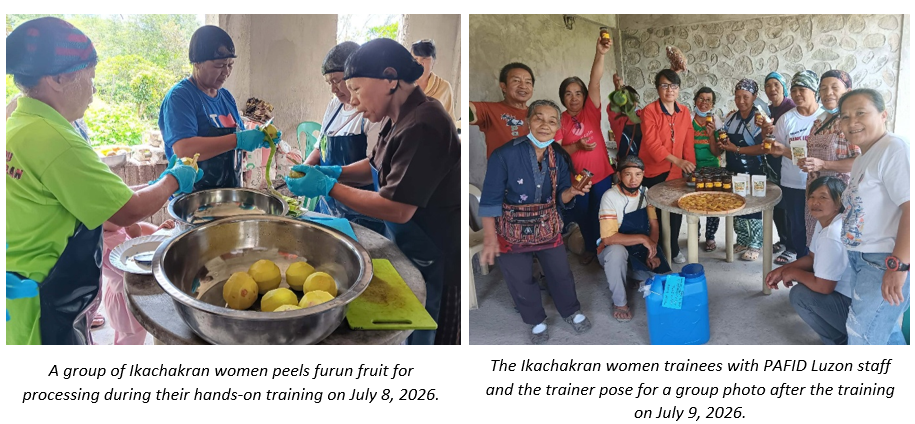
PAFID envisions livelihood support interventions like this to provide additional income to local indigenous communities while increasing the value of community-led forest and biodiversity conservation efforts. In the case of the Ikachakran women of Lunas, they have learned that they can produce marketable products using readily available non-timber forest products from their centuries-old forest, like the furun fruit.
“We used to see furun as just another wild fruit in the forest with no real value. Now the products that we produce from this fruit carry the name of our place”, some of the women said during their processing training. “We no longer need to buy the major ingredients of our product because we get them from our forest”, they added.
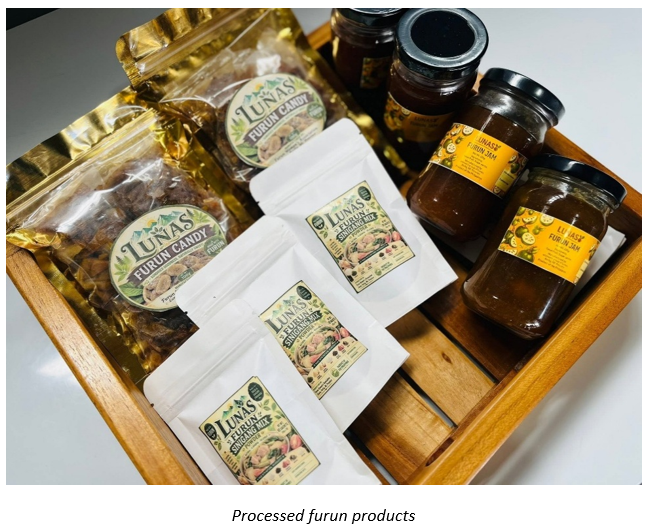
As of this writing, the Ikachakran women of Lunas are selling their furun products in their community and its vicinity. The products are also undergoing continuous development based on customer feedback and innovations by the group.